Networking for System Administrators (IT Mastery)
Michael W. Lucas
In Progress.
 ____ ____ ____ ____
||D |||A |||N |||E ||          _________
||__|||__|||__|||__||         || Enter ||
|/__\|/__\|/__\|/__\|         ||_______||
 ____           ____ ____ ____ ____ ____
||H ||____ ____||R |||E |||C |||H |||T ||
||__|||O |||B |||__|||__|||__|||__|||__||
|/__\||__|||__||/__\|/__\|/__\|/__\|/__\|
This page serves as a personal archive of my reading list. It began as a carefully crafted bottom-up sequence in order to achieve Linux kernel contributor-level proficiency, but eventually became a medium of realizing the greater purpose and joy of learning.
Being a recovering completionist, it strictly features literature that I have read comprehensively (appendices and other sections included). If you can help it, don't do this to yourself. Technical books are a special kind of fun, and I sincerely hope this page helps seekers make more educated book purchasing decisions.
Happy reading!
Michael W. Lucas
In Progress.
Peter Jay Salzman, et al.
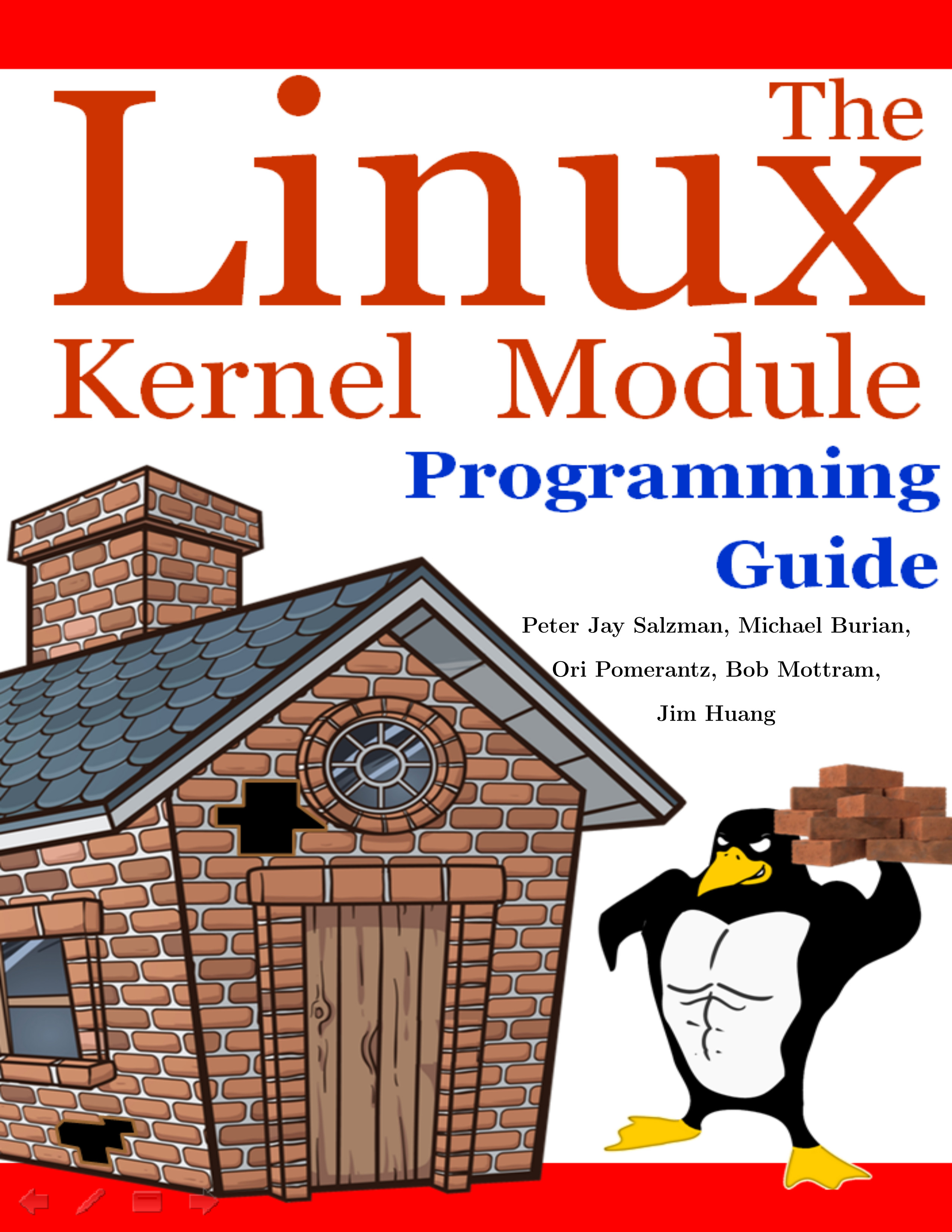
Super practical, if not a bit dodgy—you can judge a book by its cover. The setup guide is completely shot, so here's a GitHub repository with functioning instructions I pulled hair out making.

There's a sense of immediate gratification that keeps you hooked, and overall, it's a quick read. It distinctly requires the context of the previous books, minus FoDE. I preferred this as a next step over the more heady Linux Kernel Development by Robert Love, but I still mean to get to that eventually.

If you're comfortable hacking together a solution when the book veers into errors, I'd highly recommend it.
Brian W. Kernighan & Rob Pike

I started reading this as more of a historical piece and as a desparate follow-up to K&R2 but quickly realized it was so much more than both of those use cases combined.

There are so many great bits of wisdom and practical knowledge here, and I sincerely can't get enough of Brian's writing style. Provides unexpected but engaging challenges, namely converting the original C to a more modern version.

A must read for Unix heads.
Ulrich Drepper
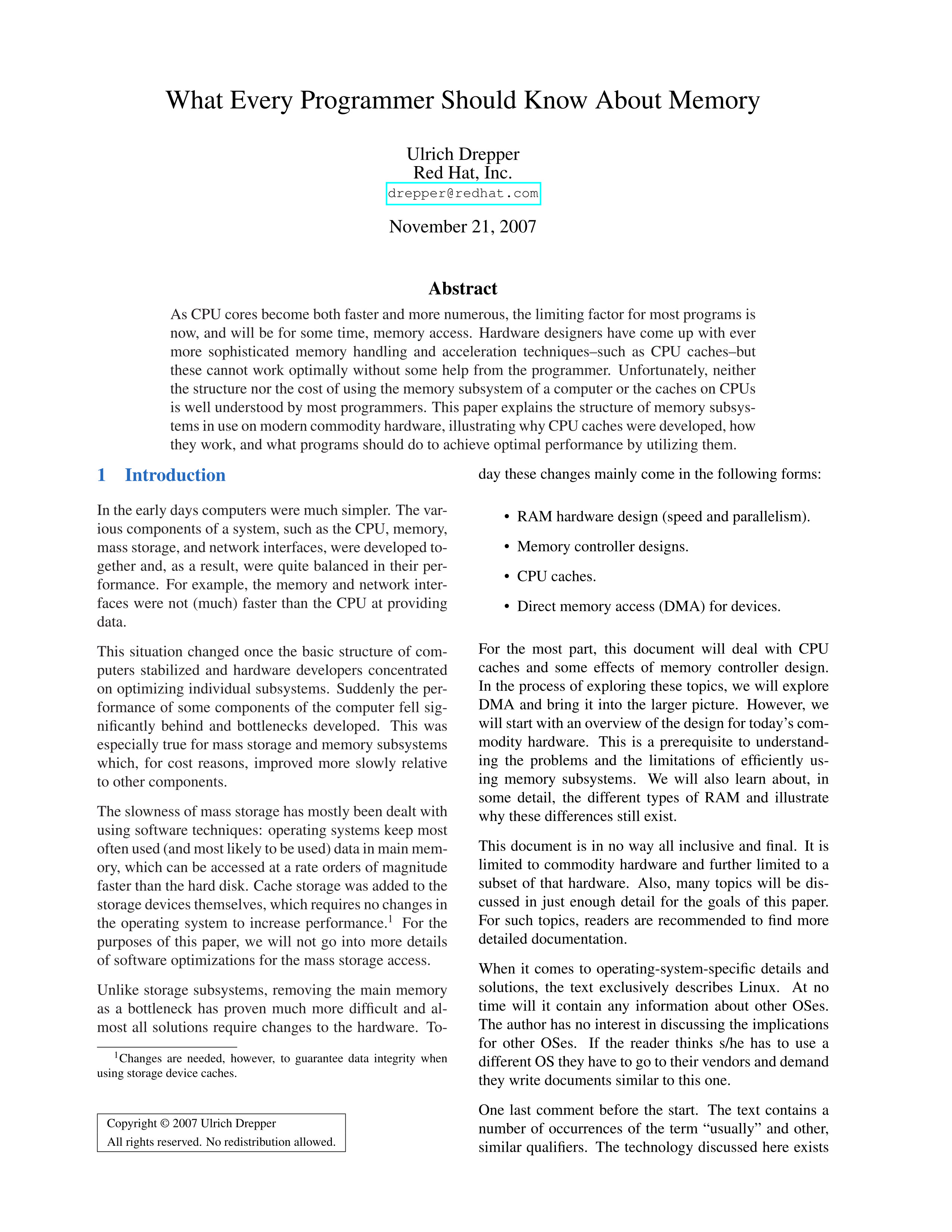
The ubiquitous whitepaper by Drepper.

Elegantly ties computer science concepts to physical reality in ways that many other writers struggle to accomplish. Doesn't make the common mistake of assuming the reader is inept. Occasionally shows it's age based on it's description of "the current landscape" but the foundational knowledge remains applicable and will for years to come.

Simple, clean, and famous for a reason.
Joe Reis & Matt Housley

The silent goal of this book is to jam the Data Engineering Lifecycle and as many general CS concepts in your head as it can. Honestly, I don't mind it.

The most common complaint is that it's dense, and that's valid—there are a few topics which are repeated almost verbatim multiple times. I think I read the definition of a CSV and why it's useful at least three times. I personally enjoy repetition, so your level of annoyance may vary here.

Overall, and considering it was the most job-relevant book of the bunch, I couldn't think of a better, more comprehensive introduction to Data Engineering.
Remzi H. Arpaci-Dusseau & Andrew C. Arpaci-Dusseau
The best book on operating systems. I did not appreciate the condescending humor and assumptions of what constitutes an "astute" reader.
Noel Kalicharan

A fine primer that I wouldn't personally recommend.

Contains a handful of excellent expositions on essential data structures, poor examples, and an overwhelming amount of sub-par exercises. Second edition might be improved but I wouldn't count on it; ordered the first edition on accident.

Still very much worth the read for my purposes (going from near zero awareness to toy implementations).
Brian W. Kernighan & Dennis M. Ritchie

The best technical book ever written, on the best programming language ever designed, by the best technical writer of all time.
Jonathan Bartlett

Assembly by a brother in the Faith. Super friendly and free!
Jon Stokes

The self-proclaimed natural follow-up to Code. Zooms out ever so slightly to provide a much more detailed overview of core CPU functionality and how it interfaces with other hardware. I don't think there's a viable alternative to the topic without diving into an otherwise dense undergraduate-level textbook.
J. Clark Scott

An excellent complement to Code. The chapter entitled "Philosophy" is wonderful and incredibly relevant.
Elicia White

This book was my introduction to technical reading in college. While it didn't have the same effect as Code, it gave me the discipline I needed to read consistently.

Elicia White speaks with passion and insight, but the content itself felt a little scattered. There are some really nice tid-bits about the industry here and there, but when it came to the actual systems themselves, the fluctating level of abstraction became disorienting; it was both too low and high-level at the same time.

While the book certainly served it's purpose for me, I don't think I'd personally recommend it to someone.
 ______
||PgUp||
||____||
|/____\|
